



THE ARCHIVE OF TEODOR VUJIĆ
2014-2026
Multimedia installation, lecture-performance, artistic research
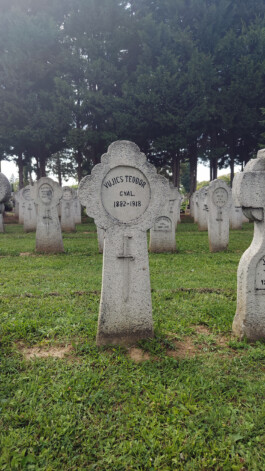
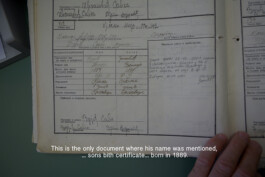
The Archive of Teodor Vujić is a multimedia installation and research project that took place between 2014 and 2026, tracing the life of an artist's great-grandfather, a man who existed, for a long time, only in family memory. According to oral history passed through generations, Teodor was conscripted into the Austro-Hungarian Army (K.u.K) during World War I, and died on the battlefield, buried in the Alps.The family retelling claimed his gravestone existed somewhere, yet no one had ever known where, and no one had ever visited it.
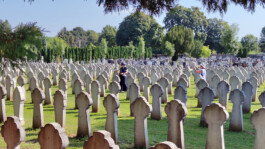
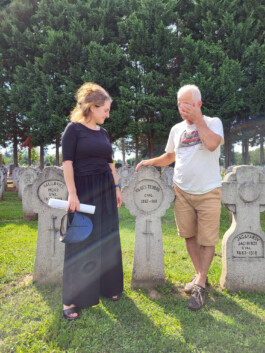
Over twelve years of research, the search ultimately led to Pécs, Hungary, where Teodor's gravestone was found. The discovery did not close the story, it opened it further, layering new elements onto a family narrative that had been passed down in fragments and connecting previously unknown threads across generations.
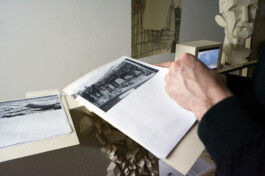
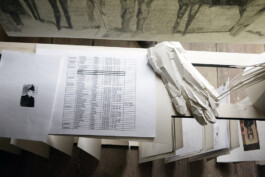
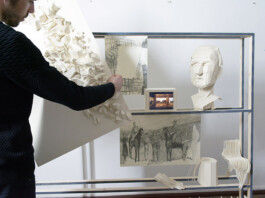
The archive assembles what was once unconfirmable: an audio recording of a father recounting the family story, a reconstructed image of how Teodor may have looked, video of the artist retracing his presumed movements, drawings, photographs, legal documents, historical maps, depictions of the K.u.K's Bosnian regiment, and correspondences with municipalities and war archives in Austria and Hungary. The project shifts form across contexts , appearing as multimedia installation, lecture-performance, or framed legal document — specifically an application for Teodor's posthumous Austrian and Hungarian citizenship.
That legal claim is central to the work. The project argues that the highest form of belonging to a nation is dying for it. In doing so, it reframes Teodor's story as one among countless similar destinies, soldiers from the margins of empire used as cannon fodder. The work speaks to transnational power relations, opening a comparison to contemporary Bosnia and its political position within Europe.
The work sits at the intersection of personal identity, family myth, and the broader political histories of war, displacement, and European citizenship. It interrogates who history remembers, and on whose terms belonging is granted then and now.